The mother cannabinoid gets its first human trials
What is CBG? The non-intoxicating cannabinoid behind THC and CBD: why it is scarce, what the first human trial found, which CBG products NY stores carry and how to check the label.
TL;DR too long; didn't read
CBG doesn't get you high. The plant turns its acid form, CBGA, into THC, CBD and CBC, so little CBG is left.
One real human trial so far: 34 people, one 20 mg dose, lower anxiety for an hour. Not repeated yet.
On Nifty today, 85% of CBG products also say THC in the name, and 78% are edibles.
"With CBG" means nothing without the milligrams. Read the back of the box.
CBG went from a lab footnote to a gummy flavor in a few years. The marketing moved faster than the science.
CBG, short for cannabigerol, is a cannabinoid from the cannabis plant that does not get you high. It's called the "mother cannabinoid" because its acid form, CBGA, is the compound the plant converts into THC, CBD and other cannabinoids. By harvest little of it is left, which kept CBG obscure for decades.
It now appears in New York gummies, tinctures and vapes, usually sold on calm and focus. The first human trial was encouraging. The evidence is still thin.
Why CBG is called the mother cannabinoid
A cannabis plant does not make THC or CBD from scratch. It first builds one parent compound, cannabigerolic acid (CBGA). Enzymes then convert CBGA into three other acids:
THCA, which becomes THC when heated
CBDA, which becomes CBD
CBCA, which becomes CBC, another minor cannabinoid
Any CBGA left unconverted can lose its acid group through heat or light and become CBG. That step, decarboxylation, is the same one that turns THCA into THC. More in what cannabinoids are.
In a high-THC plant the enzymes turn nearly all the CBGA into THCA, leaving only traces of CBG in the dried flower. A plant bred for CBD does the same, toward CBDA.
That scarcity is one reason CBG products often cost more than similar CBD products, and why CBG is usually sourced from hemp and added as a measured ingredient.
CBG in New York stores: Nifty's numbers
We looked at every product in stock at licensed New York stores on Nifty on November 15, 2026, grouped by the name on the menu. Close, not exact.
2,951 in-stock products have CBG in the name, on the menu at 535 stores. For scale: 7,038 say CBD and 2,630 say CBN.
85% of them also say THC in the name.
Median price: $25 a product. CBD products: $28.
24% of CBG names use words like daytime, energy, focus or sativa. Only 6% say sleep, night, dream or indica.
Form
Share of CBG products
Median price
Edibles (gummies, chews, chocolate, drinks)
78%
$24.78
Tinctures and capsules
8%
$40
Filed under "CBD" by the store
8%
$30
Vapes
3%
$45
Here's the surprise. CBG is the expensive one to make, but CBG products have a lower median price than CBD products. That's because almost all of them are gummies, and almost all of those are THC gummies with CBG added. The price is mostly the THC edible. How much CBG you get is on the label, not in the name.
How CBG acts in the body
THC strongly activates the CB1 receptor in the brain, which causes the high. Lab studies describe CBG as at most a weak partial activator of CB1 and CB2, and a 2024 review in Molecules states that it "does not induce intoxication".
The same lab work found that CBG acts on two targets outside the cannabinoid system: the alpha-2 adrenergic receptor and the serotonin receptor 5-HT1A. Those findings come largely from mouse brain tissue. They justify studying CBG in people. They do not show what it does in people.
The first controlled trial of CBG's immediate effects in people was led by Carrie Cuttler, a psychologist at Washington State University, with colleagues at UCLA, and published in Scientific Reports in 2024.
The design:
Who: 34 healthy adults, all experienced cannabis users.
What: Each took a tincture with 20 mg of hemp-derived CBG in one session and a placebo in another, a week apart. Neither participants nor researchers knew which was which.
How: Sessions ran over Zoom. Participants rated anxiety, stress and mood before dosing and at three points after, and took a memory test.
The results:
Anxiety ratings were lower after CBG than placebo at 20, 45 and 60 minutes.
Stress ratings were lower at the first check only.
Memory for word lists was better after CBG. Cuttler said the team triple-checked it.
Intoxication ratings stayed low, with no sign of impaired thinking or coordination and only minimal changes in dry mouth, sleepiness and appetite.
Mood did not improve, though CBG users often say it lifts their mood.
Limits of the CBG trial
Its authors were clear about the limits:
34 people is a small group, and all already used cannabis. People who never have might respond differently.
It tested one modest dose, taken once. It says nothing about daily use.
Everything was self-rated over video, with no physical measures such as heart rate or stress hormones. The team says its next trial will add them.
Before this study, the main human evidence was a survey by the same researcher. About half the CBG users who answered took it for anxiety, and most of those said it worked better than conventional medication. A survey shows why people use something. Without a placebo, it cannot show whether it works.
Most other CBG claims trace back to cell or animal studies. The Molecules review lists mouse studies of gut inflammation, nerve damage, Huntington's disease and blood pressure, plus lab work on cancer cells. The authors call the field "still in its early stages" and note that for cancer, CBG has not reached clinical trials.
Human safety is barely studied. The review reports no eye or nerve toxicity in rodents, but also one mouse study in which a high dose made liver inflammation worse. No long-term human safety data has been published.
A label promising focus, pain relief or better sleep is ahead of the science. If you take prescription medication, ask a doctor or pharmacist first, as you would with CBD.
The kinds of CBG products New York stores carry
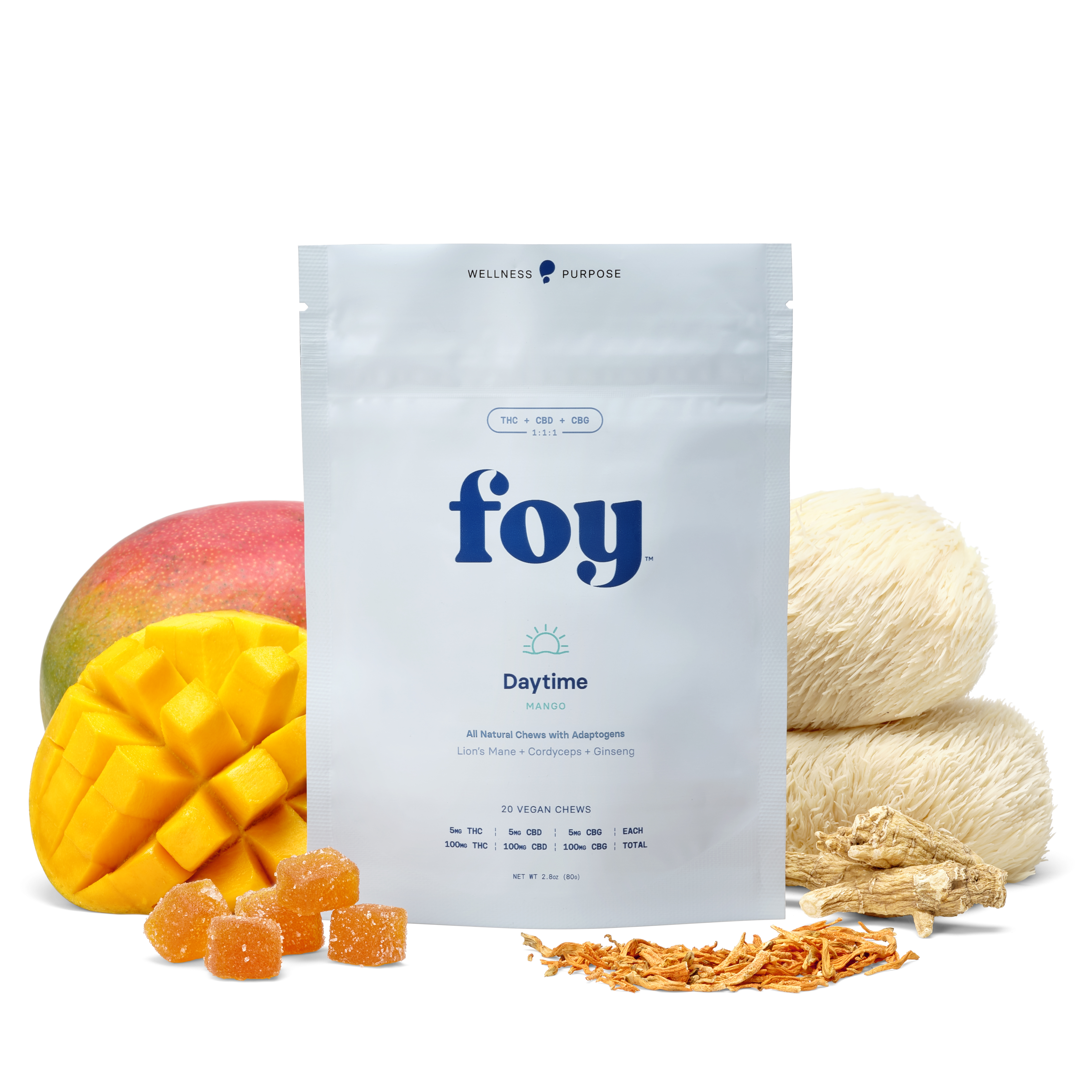
On Nifty today, the most common ratios in CBG product names are 1:1:1 with a third cannabinoid (351 products), 1:1 (346), 3:1 (191) and 2:1 (161). Brands write the order differently, so the milligrams on the back are what count.
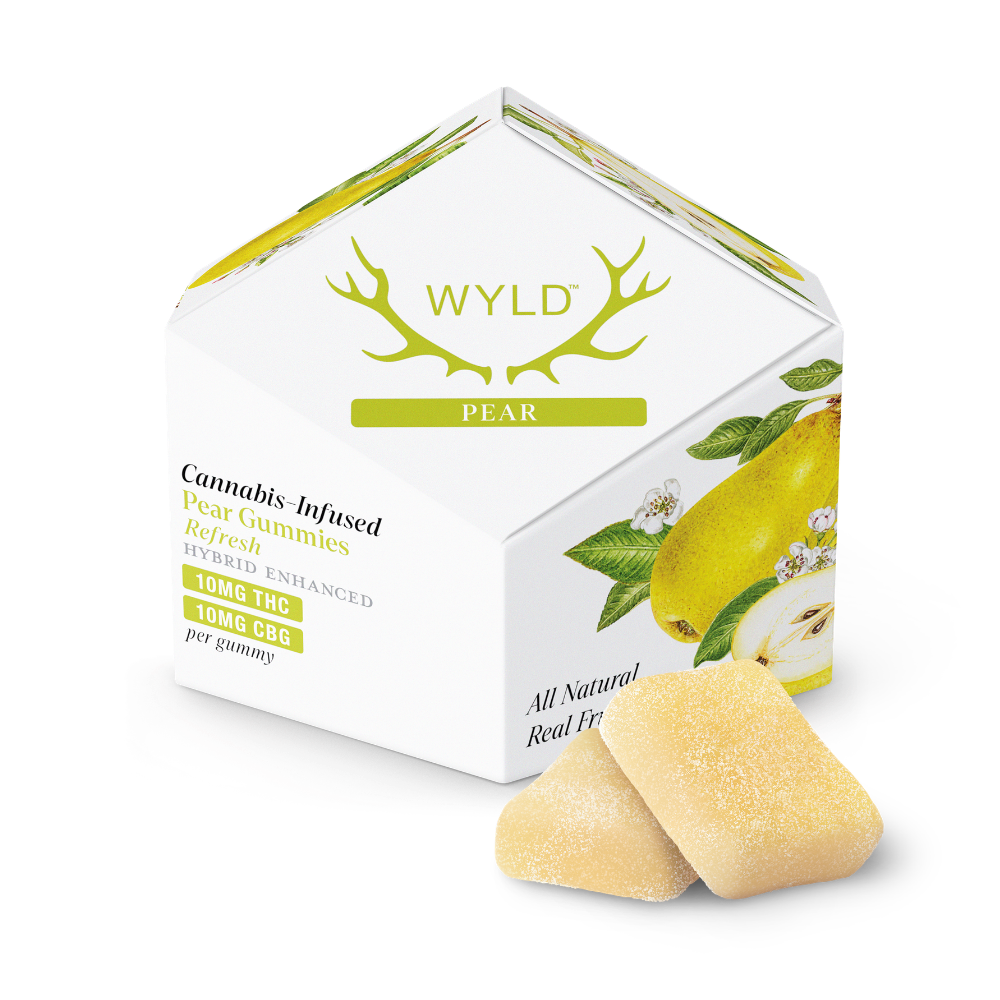
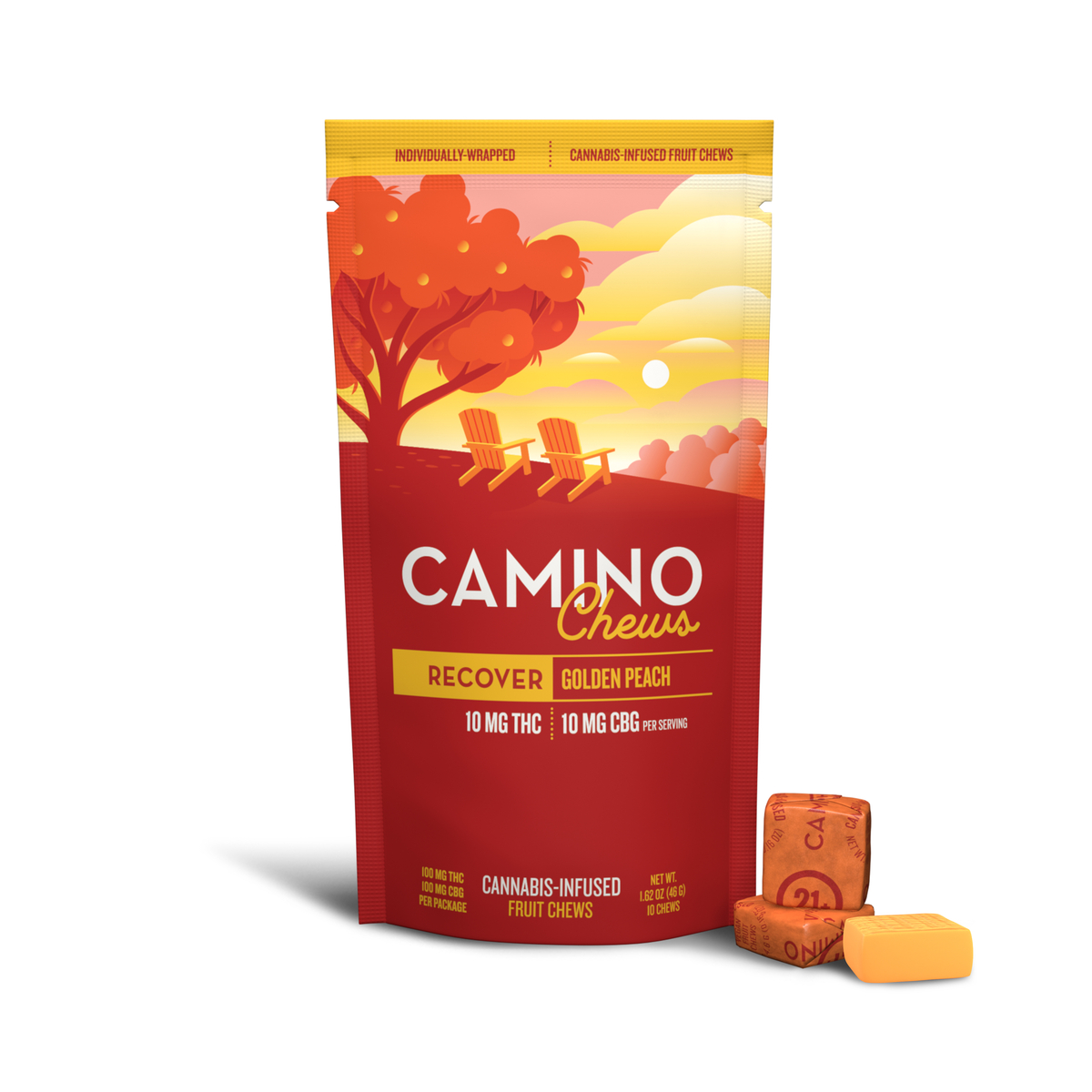
Wyld's Pear 1:1 was on up to 77 store menus today, the most of any CBG product on Nifty. Camino's "Recover" chews list 10 mg THC and 10 mg CBG per chew. That's half the 20 mg used in the trial.
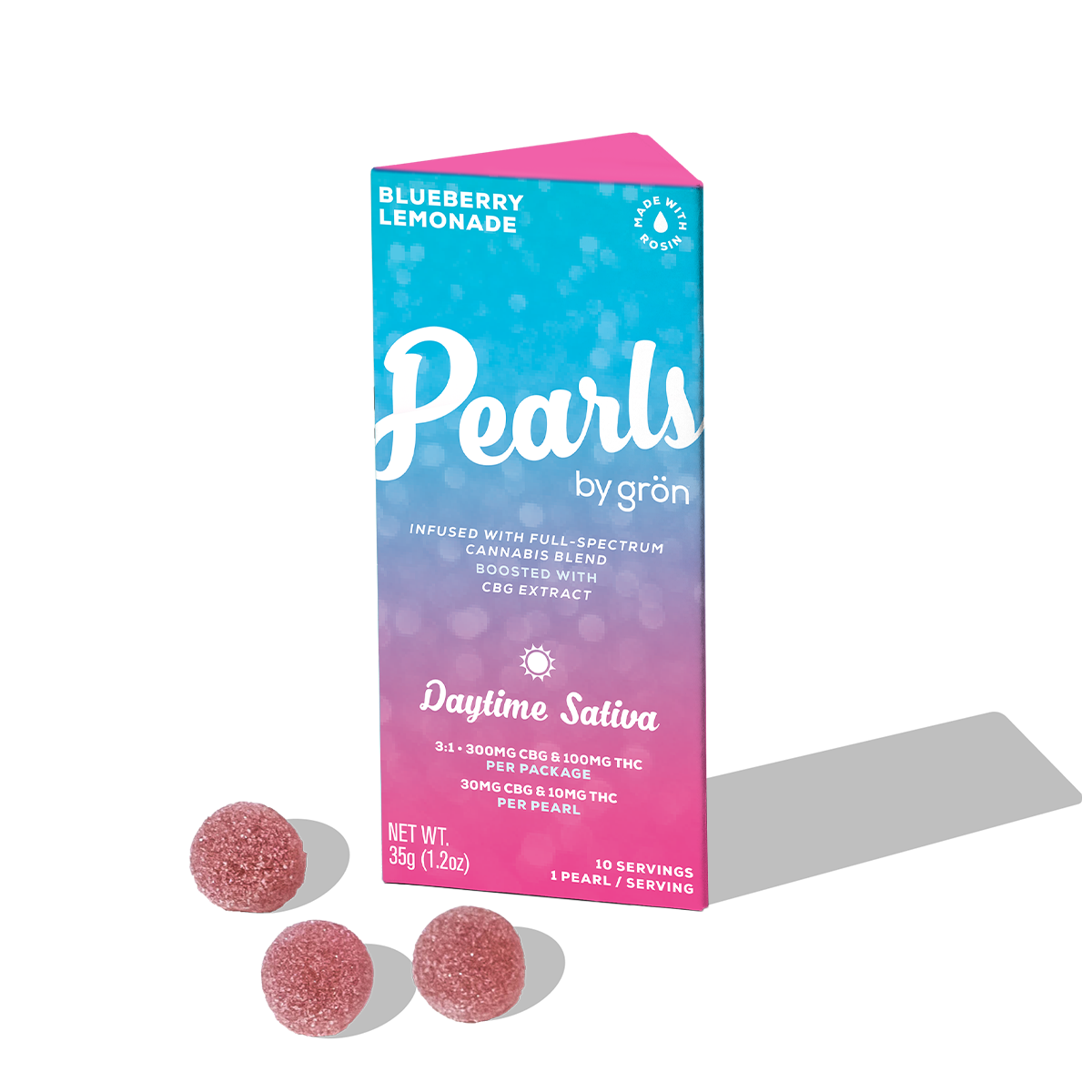
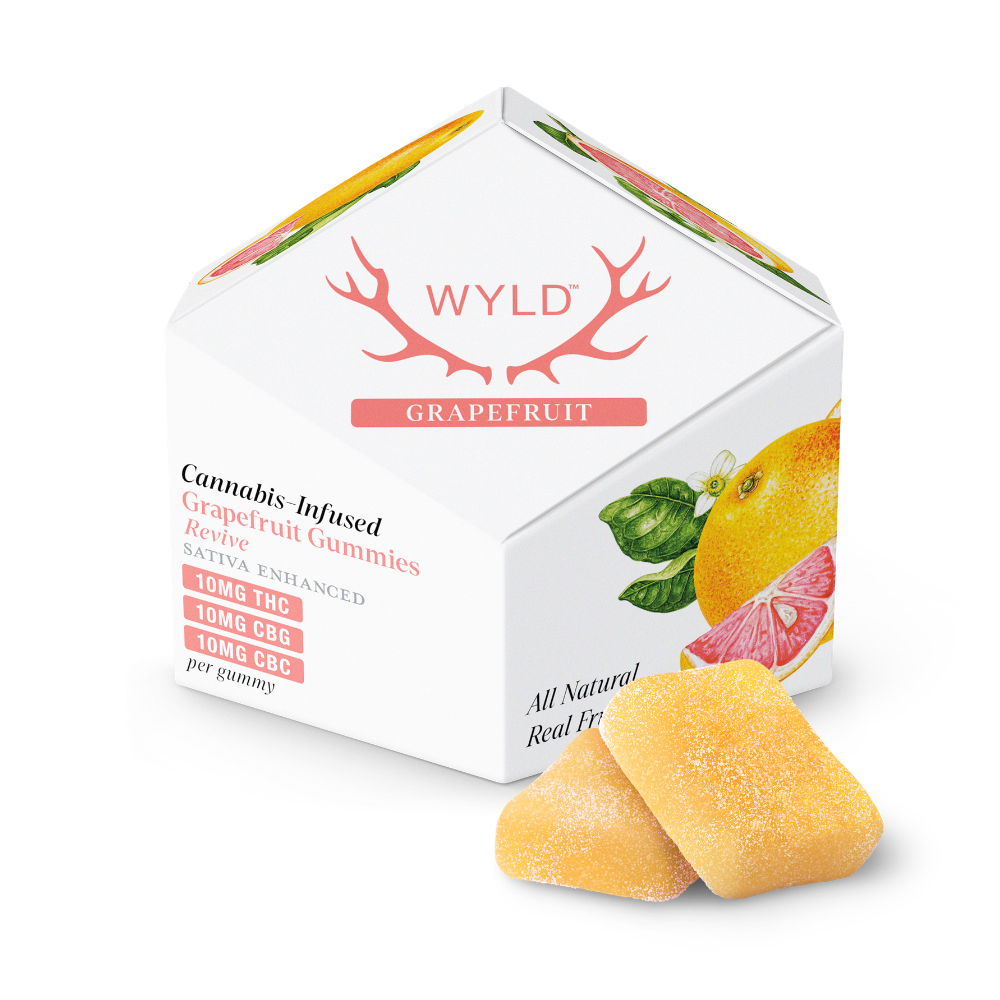
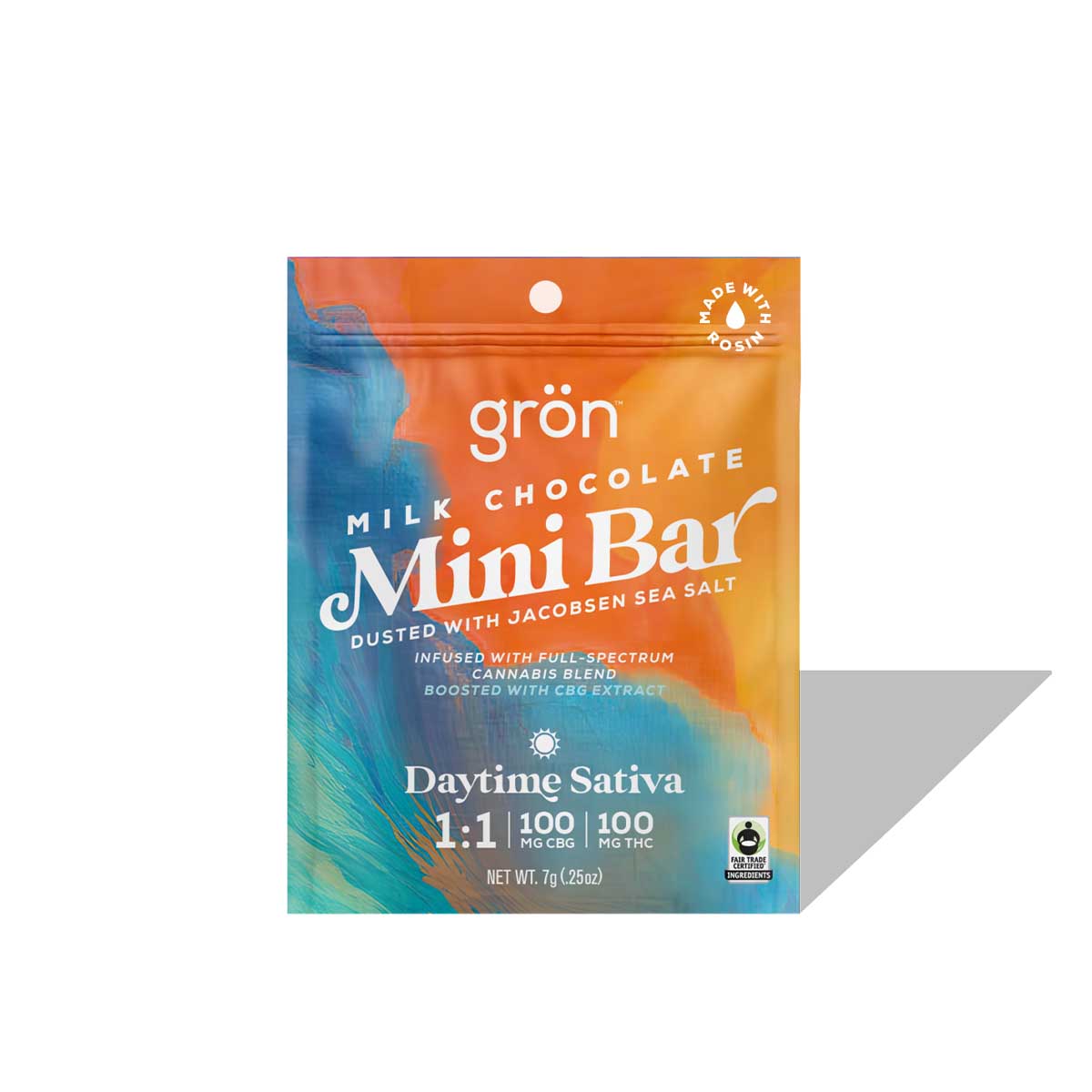
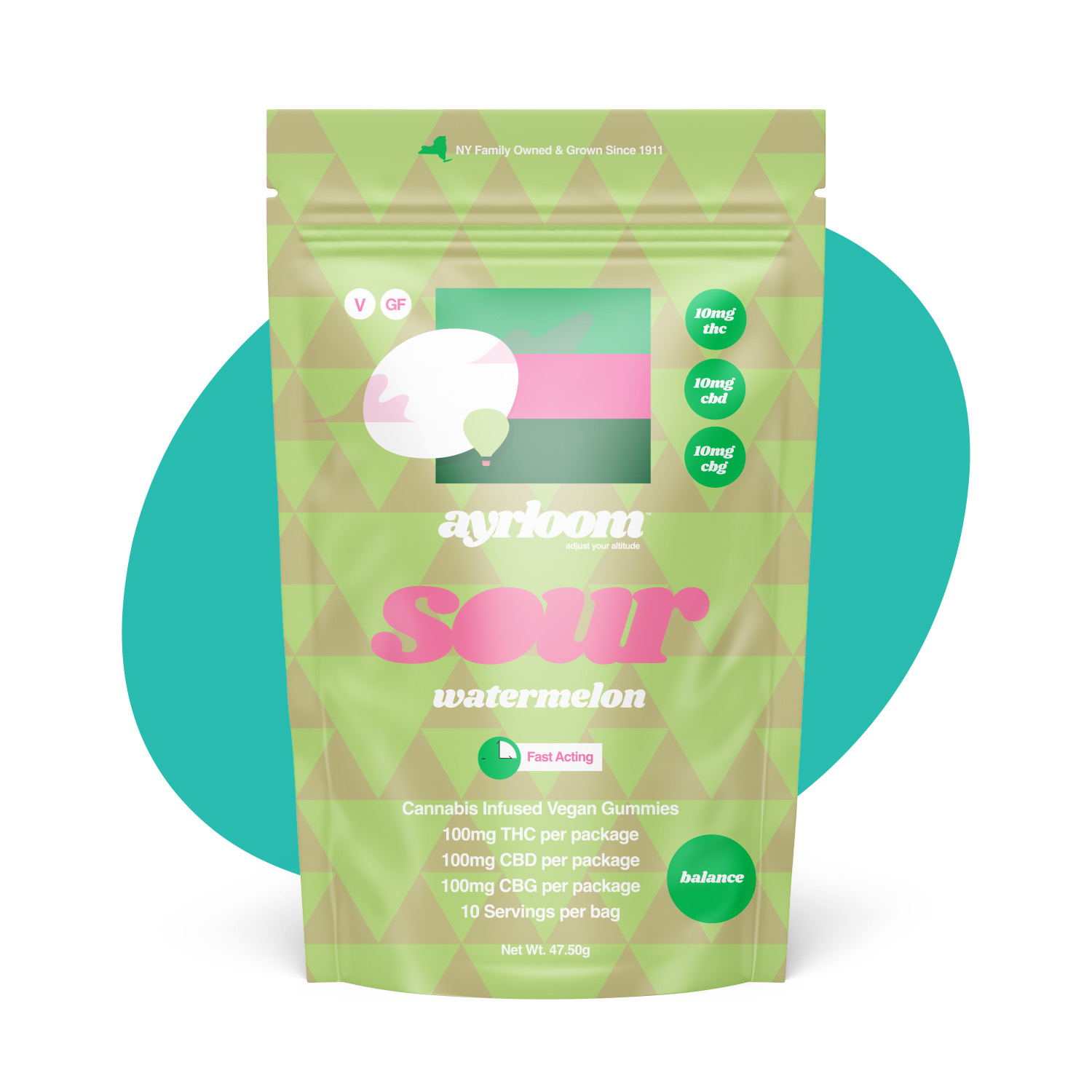
Grön's Blueberry Lemonade Pearls are 3:1 CBG to THC by their name. Wyld's Grapefruit adds CBC, and Ayrloom's Sour Watermelon lists 10 mg each of THC, CBD and CBG.
"Daytime", "energy" and vapes
This is where the focus marketing lives. The words are the brand's, not the research.
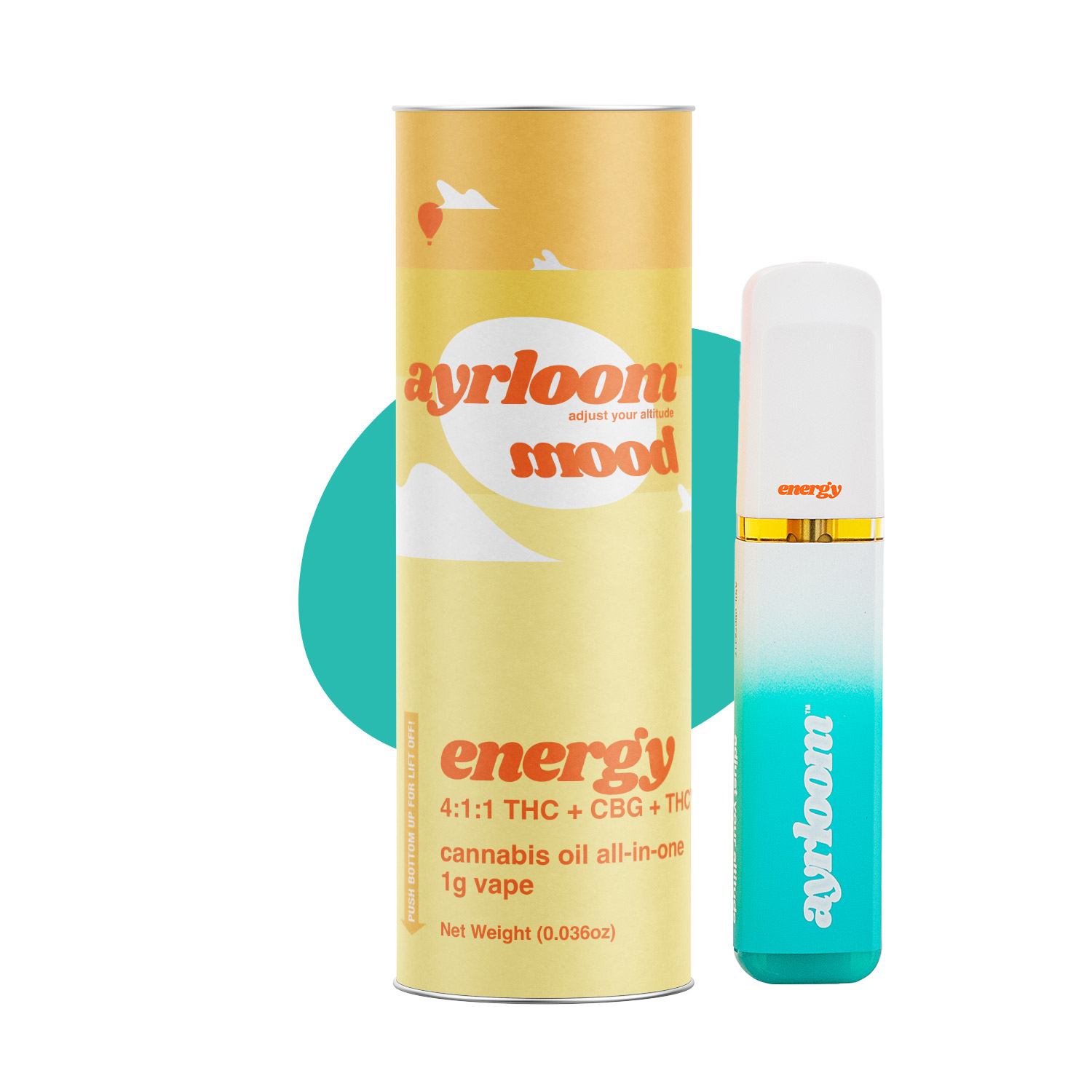
Ayrloom's Mood vapes are all-in-ones: Energy lists THC, THCV and CBG, Recover lists THC, CBD and CBG. Compare the cannabinoid numbers on the label, not the name.
Pick in 10 seconds
Want to try CBG the way the trial did? A tincture, with the CBG milligrams printed.
Want a THC gummy with some CBG? 1:1 CBG to THC, 5 mg THC or less to start.
Want more CBG than THC? 3:1 CBG first, and check it really is CBG first.
Want a puff, not an edible? A CBG blend vape, and read the cannabinoid numbers on the label.
Want the cannabinoid with the most research? That's CBD, not CBG.
CBD vs CBG vs CBN side by side
CBD
CBG
CBN
Gets you high?
No
No
Barely, if at all, at retail doses
Where it comes from
Made by the plant (from CBGA)
Made by the plant (CBGA is the parent)
Forms as THC ages
Human evidence
One FDA-approved drug for rare seizures
One small trial (34 people, 2024)
Two trials, mixed results on sleep
In-stock products on Nifty*
7,038
2,951
2,630
Also say THC in the name*
73%
85%
87%
Median price*
$28
$25
$25
*Nifty's in-stock record at licensed New York stores, November 15, 2026, grouped by product name. Close, not exact. More in CBD vs CBG vs CBN.
Our pick: CBG first, milligrams printed
If you want to try CBG, pick a product where CBG is the bigger number (a 3:1 CBG to THC) or at least equal, and where the milligrams per serving are on the box. A product that says "with CBG" on the front and lists 1 mg on the back is a THC gummy with a sticker. And go in knowing the honest version: one small trial, nothing more yet.
How to buy CBG in New York
CBG is sold in two places. Businesses with a cannabinoid hemp license or permit from the Office of Cannabis Management (OCM) sell hemp CBG products. Licensed dispensaries sell CBG products that usually also contain THC or CBD, most often gummies, tinctures and vapes.
Because CBG is expensive, read the back of the box:
Find the milligrams of CBG per serving. New York requires any cannabinoid marketed on the package to be listed in milligrams per serving. "With CBG" on the front and 1 mg on the back is marketing, not a dose. The trial used 20 mg.
Read the THC. A "1:1 CBG to THC" gummy with 5 mg of each is intoxicating. OCM suggests new consumers start with 2.5 to 5 mg of THC in an edible.
Scan the QR code. Every regulated product links to a certificate of analysis, the lab report for that batch.
When the front says CBG and the back says 1 mg · via GIPHY
The trial used a tincture, an oil measured with a dropper, and took ratings at 20, 45 and 60 minutes. That is the only timing data for CBG in people. Gummies and vapes were not tested, so any exact timeline for a CBG gummy is a guess.
If the product also contains THC, the THC sets the pace. New York requires edibles to warn that effects "may be delayed by 4 or more hours", and OCM tells consumers to wait for the effect before taking more. With a vape or flower, OCM suggests waiting 5 to 10 minutes after one or two puffs.
No. Participants in the 2024 trial reported low intoxication ratings after 20 mg. A CBG product that also contains THC can still be intoxicating, and on Nifty 85% of in-stock CBG products say THC in the name.
What is the difference between CBG and CBD?
Both are non-intoxicating cannabinoids, but different molecules. CBD has an FDA-approved use for certain seizures and far more research. CBG is scarcer, costs more to make and has one small controlled human trial. See CBD vs CBG vs CBN.
Does CBG help with anxiety?
One controlled trial of 34 adults found lower anxiety ratings for an hour after a single 20 mg dose compared with placebo. It has not been repeated, so it is early evidence, not proof.
Why is CBG more expensive than CBD?
The plant converts most of its CBGA into THC or CBD as it grows, so a mature plant contains very little CBG to extract. On dispensary shelves you may not see it in the price: most CBG products are THC gummies, and their median on Nifty is $25 against $28 for CBD products.
What CBG products do New York dispensaries sell?
Mostly gummies and chews: 78% of in-stock CBG products on Nifty are edibles. The rest are tinctures, CBD-shelf products, vapes, and a few topicals, pre-rolls and concentrates. The most common ratios are 1:1:1 and 1:1.
Is CBG legal in New York?
Yes. Businesses with an OCM cannabinoid hemp license or permit can sell hemp CBG products, and licensed dispensaries sell cannabis products that contain CBG.
Product counts, ratios, store counts and median prices: Nifty's own record of in-stock products at licensed New York stores, November 15, 2026, grouped by product name.
This article is general information for adults 21 and over. It isn't medical or legal advice. Talk to a doctor before using cannabis for a health condition, or with other medication.
What is CBN?
Sold as the sleep cannabinoid. The proof is thin.
CBN forms as THC ages and is sold across New York as a sleep aid. See what trials in people found, why it comes with THC, which CBN products NY stores carry and what to check on the label.
 CannabinoidsCBD vs CBG vs CBNThree compounds, three levels of proofCBD vs CBG vs CBN: three cannabinoids that don't act like THC. Compare where each comes from, what studies found and how to read a New York label.
 CannabinoidsWhat is CBD?One proven use. A lot of hype.CBD is the cannabis compound that doesn't get you high. What research supports, the risks the FDA lists, which CBD products New York stores carry and how to read a CBD label.
 Cannabinoids