Indica, CBN gummies or an edible for sleep? What studies actually found, why the label matters less than the dose, what sleep products cost at New York dispensaries and what to buy first.
TL;DR too long; didn't read
THC is what makes you drowsy. It can help you fall asleep faster. It can also make sleep worse if you use it every night.
"Indica" on the jar doesn't mean sleepy. On Nifty, indica and sativa eighths have almost the same THC (27.9% vs 27.3%) and price.
CBN is the "sleep cannabinoid" on the box. In trials, it didn't beat placebo on the main sleep measure.
A "sleep" gummy costs about $2 more than a plain one. Our pick: a low-dose edible, 2.5 to 5 mg of THC, about two hours before bed.
Ask a budtender for "something for sleep" and you'll get one of three things: an indica jar, a CBN gummy, or an edible. All three get sold with a lot of confidence. Only one of them has much research behind it, and it's not the one with "sleep" on the box.
The plain answer: THC is the part that makes you drowsy. A small dose can help you fall asleep faster. The indica label doesn't tell you much, CBN is mostly unproven, and using weed every night can make your sleep worse over time. Here's what the studies found, what New York stores sell, and what we'd buy.
You at 2:47 AM, counting the hours left · via GIPHY
One thing first. This is a shopping guide, not medical advice. If you have real insomnia, sleep apnea, or you take any medication, talk to a doctor before you try any of this.
What "weed for sleep" really means
There's no sleep strain and no sleep cannabinoid with solid proof. What stores sell for sleep comes down to three ideas:
Indica: flower or pre-rolls with "indica" on the label, sold as the relaxing kind.
CBN: a cannabinoid that forms as THC ages. It's in most gummies with "sleep" or "night" in the name. The full story is in what is CBN.
An edible: THC you eat. It kicks in slower and lasts longer than smoking.
In all three, the thing doing most of the work is THC.
What the research says about THC and sleep
The research is small and mixed. These are the main findings we could check.
THC may help you fall asleep faster. A 2017 review of the research said THC "may decrease sleep latency", the time it takes to fall asleep, "but could impair sleep quality long-term".
The best evidence is in people with pain. A 2022 analysis pooled 39 trials with 5,100 patients, most of them living with chronic pain. Cannabis medicines gave a small improvement in sleep quality. They also raised the risk of dizziness and sleepiness.
For ordinary insomnia, there's very little. A 2020 review found "insufficient evidence to support routine clinical use of cannabinoid therapies for the treatment of any sleep disorder". The NIH says the effects on sleep in people who don't have another illness "are uncertain".
One small trial did find a benefit. In 2021, 23 adults with chronic insomnia took a cannabis extract under the tongue for two weeks. Their insomnia scores dropped and they reported sleeping about an hour longer than on placebo. The extract was mostly THC: 20 mg of THC, 2 mg of CBN and 1 mg of CBD per millilitre.
Sleep apnea is a no. The American Academy of Sleep Medicine says cannabis should not be used to treat sleep apnea.
So: some support for short-term help, mostly from THC, mostly in small studies. That fits what our article on the benefits of cannabis says about sleep: moderate evidence, short-term, and narrow.
We looked at every product in stock at 603 licensed New York stores on Nifty on November 24, 2026, grouped by the name on the menu. Close, not exact: a name search also catches a few strains with "night" in the name.
4,346 in-stock products say sleep, night or CBN in the name, on the menu at 595 stores. Almost every store has one.
2,733 say CBN, at 542 stores. 1,787 say sleep or sleepy.
Three out of four are edibles: 3,248 products.
Median price: $26.55.
Form
Products
Stores
Median price
Edibles
3,248
585
$24.93
Tinctures and capsules
428
401
$50
Vapes
277
273
$42
Pre-rolls
69
126
$29.50
Now the question we wanted answered: do you pay extra for the word "sleep"? A little.
100 mg pack of gummies or chews
Products
Median price
Says sleep, night or CBN
789
$26.00
Plain, no extra cannabinoid in the name
4,380
$23.89
That's about $2 more, or 9%. Across all 100 mg edibles the gap is smaller: $25 against $24. We expected a bigger markup. The surprise is how small it is. The label isn't a rip-off. It just isn't proof.
Indica: the label isn't the effect
"Indica for night, sativa for day" is the oldest rule at the counter. The research doesn't back it.
A 2022 study looked at lab results for legal cannabis samples from six US states. It found that the indica, sativa and hybrid labels "do not consistently align" with what's chemically in the flower. Ethan Russo, a neurologist and cannabis researcher, put it harder in a 2016 interview: the sativa and indica distinction, as it's commonly used, is "total nonsense". He says you can't guess what's in a plant from its shape, and only a lab test tells you.
Nifty's numbers say the same thing about New York shelves.
Eighths (3.5g) on Nifty
Products
Median THC
Median price
Labeled indica
1,991
27.9%
$39.99
Labeled sativa
1,720
27.3%
$39.00
Labeled hybrid
3,697
27.8%
$40.00
Same strength, same price. The label is mostly a name.
Russo's own guess is that the sleepy feeling comes from a terpene called myrcene, not from "indica". That's his view in an interview, not a trial result. If you want to test it, the terpene list is on the lab report behind the QR code. See how to read a New York cannabis label.
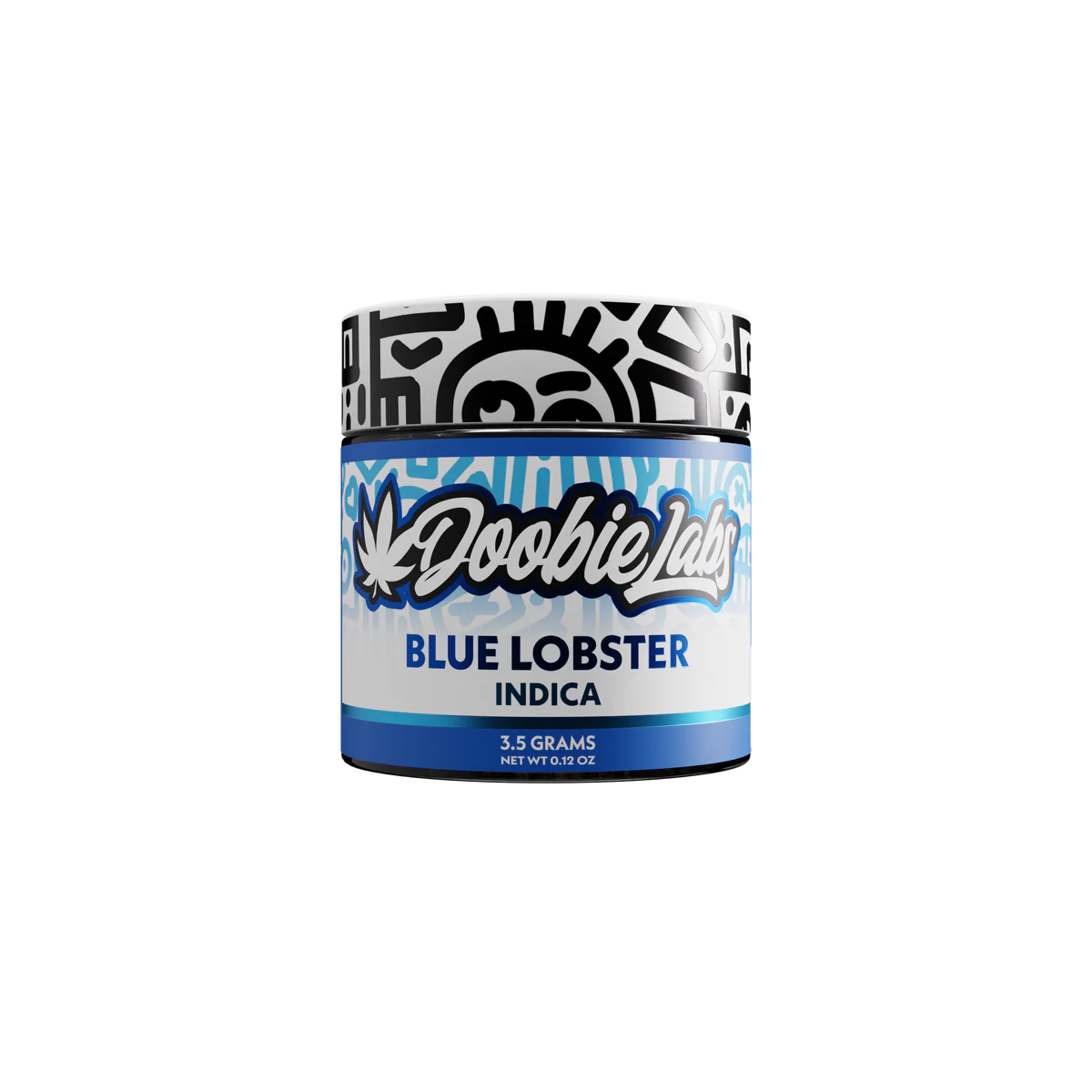
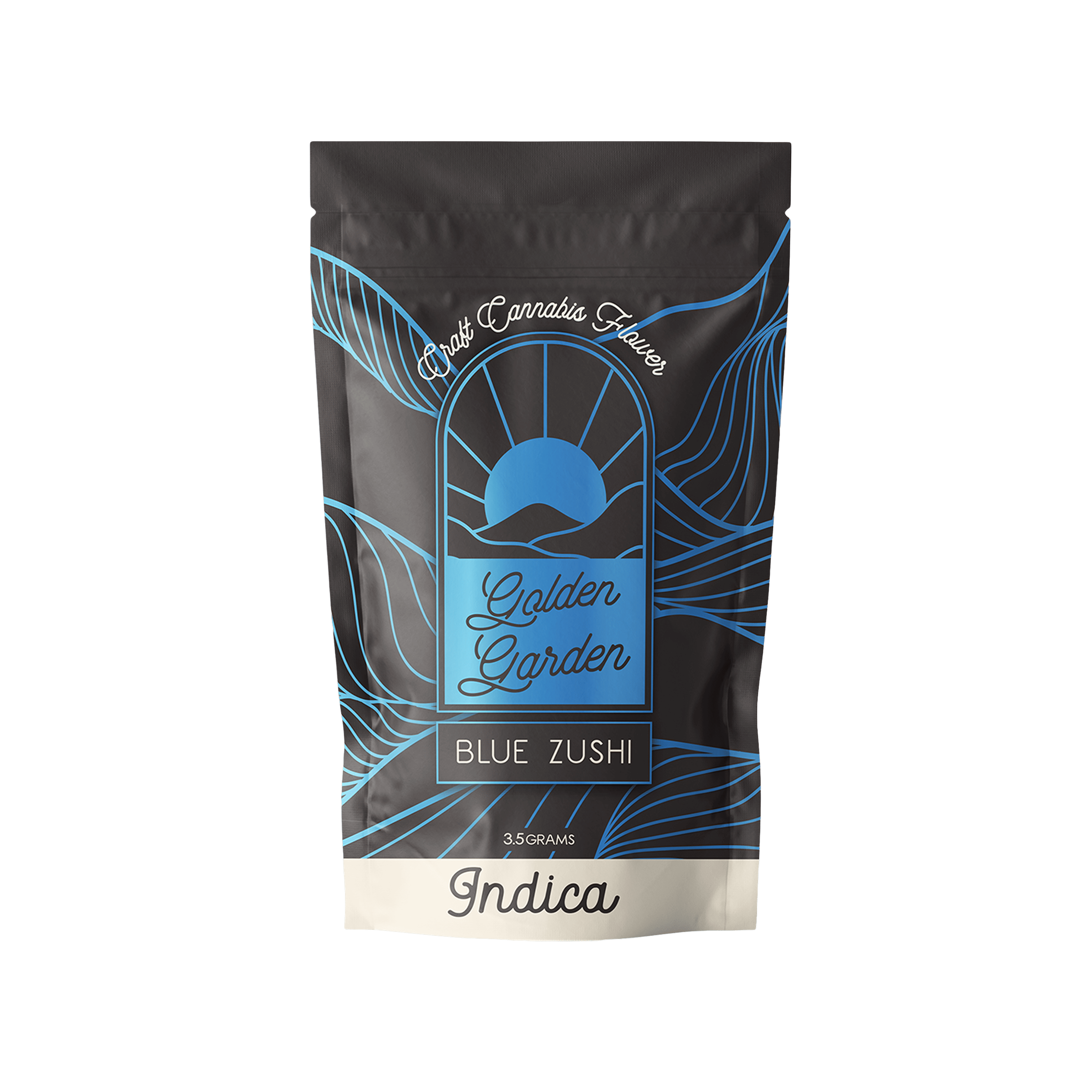
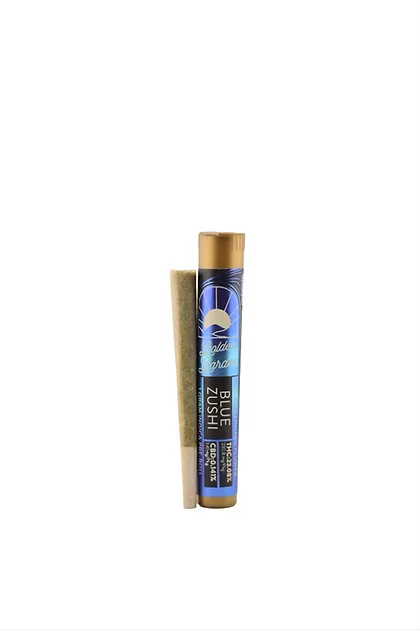
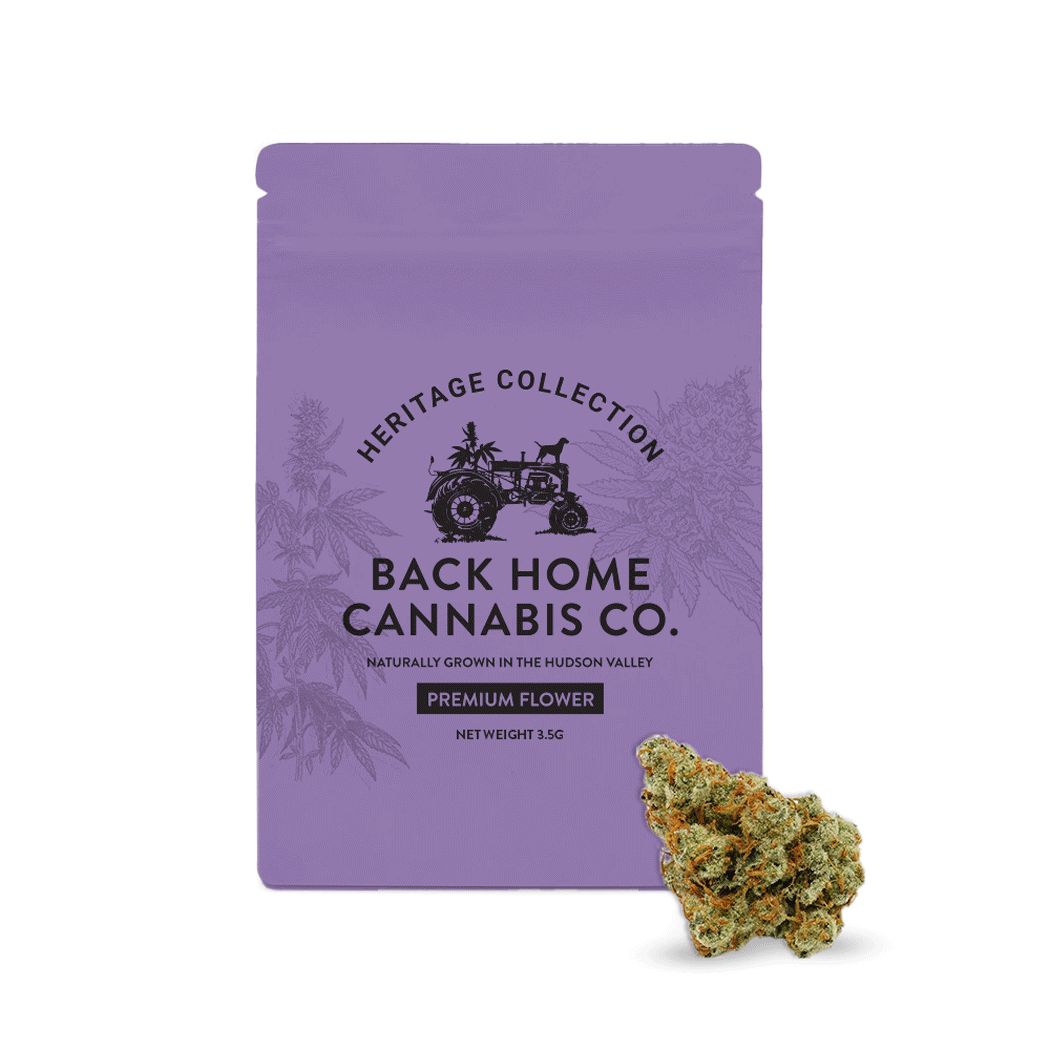
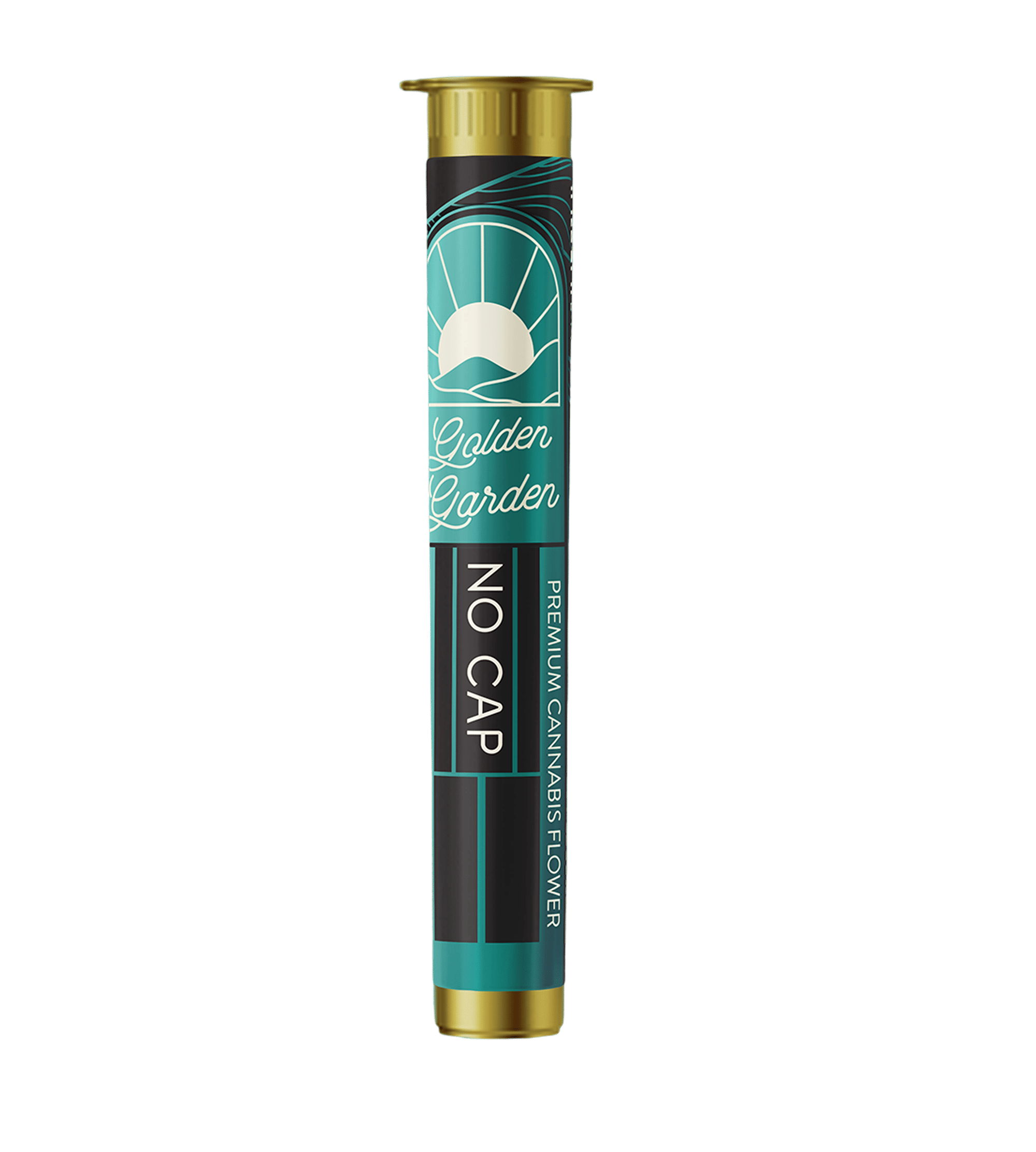
None of this means indica flower is bad for night. It means the THC does the work, and one indica can feel very different from the next. These three eighths are labeled indica and sit on a lot of menus: Doobie Labs Blue Lobster in 95 stores, Golden Garden Blue Zushi in 69 and Back Home Northern Lights in 66.
Now look at what's in the gummies. Of the 2,224 CBN edibles on Nifty, 92% also say THC in the name. The most common ratios in the names are 1:1:1 (469 products), 1:1 (287) and 2:1 (177). A "sleep" gummy is a THC gummy with some CBN added.
Reading "Deep Sleep" on the tin, then the milligrams on the back · via GIPHY
These three are in a lot of stores. The milligrams come from the product names on store menus. The label is the final word.
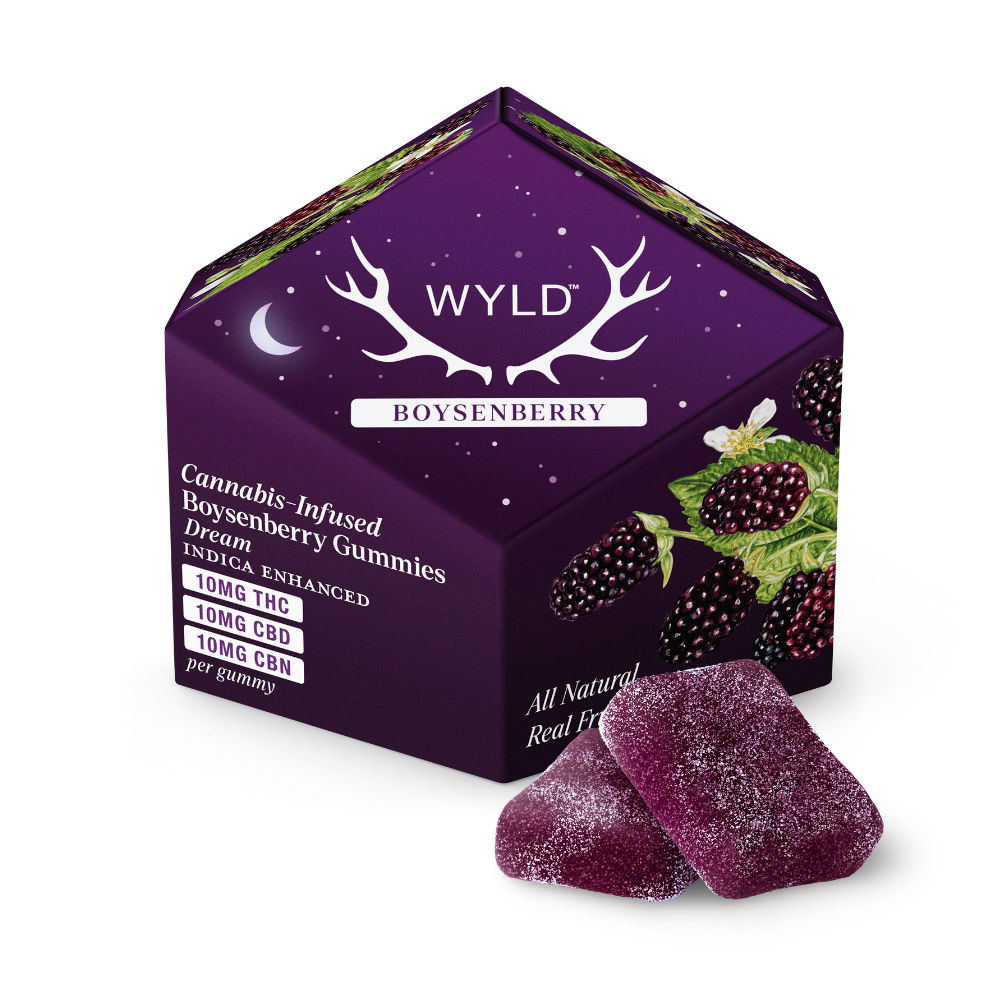
Wyld Boysenberry 1:1:1 (up to 75 stores): equal parts THC, CBD and CBN. Menus that list the pack show 100 mg of THC in 10 gummies.
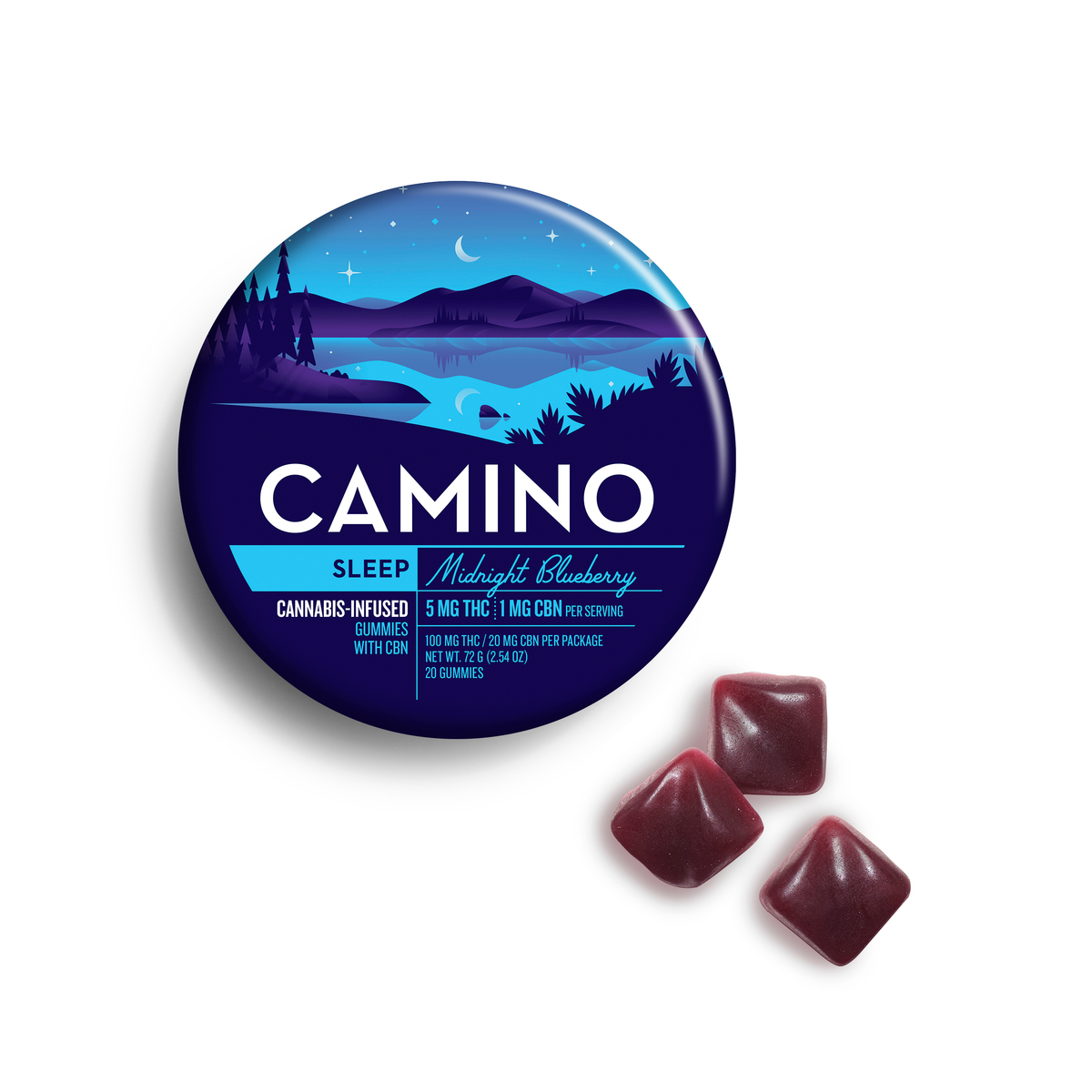
Camino Midnight Blueberry 5:1 "Sleep" (66 stores): a 20-pack. Menus that list milligrams show 100 mg of THC and 20 mg of CBN, so 5 mg of THC and 1 mg of CBN a gummy. A good low dose of THC. Very little CBN.
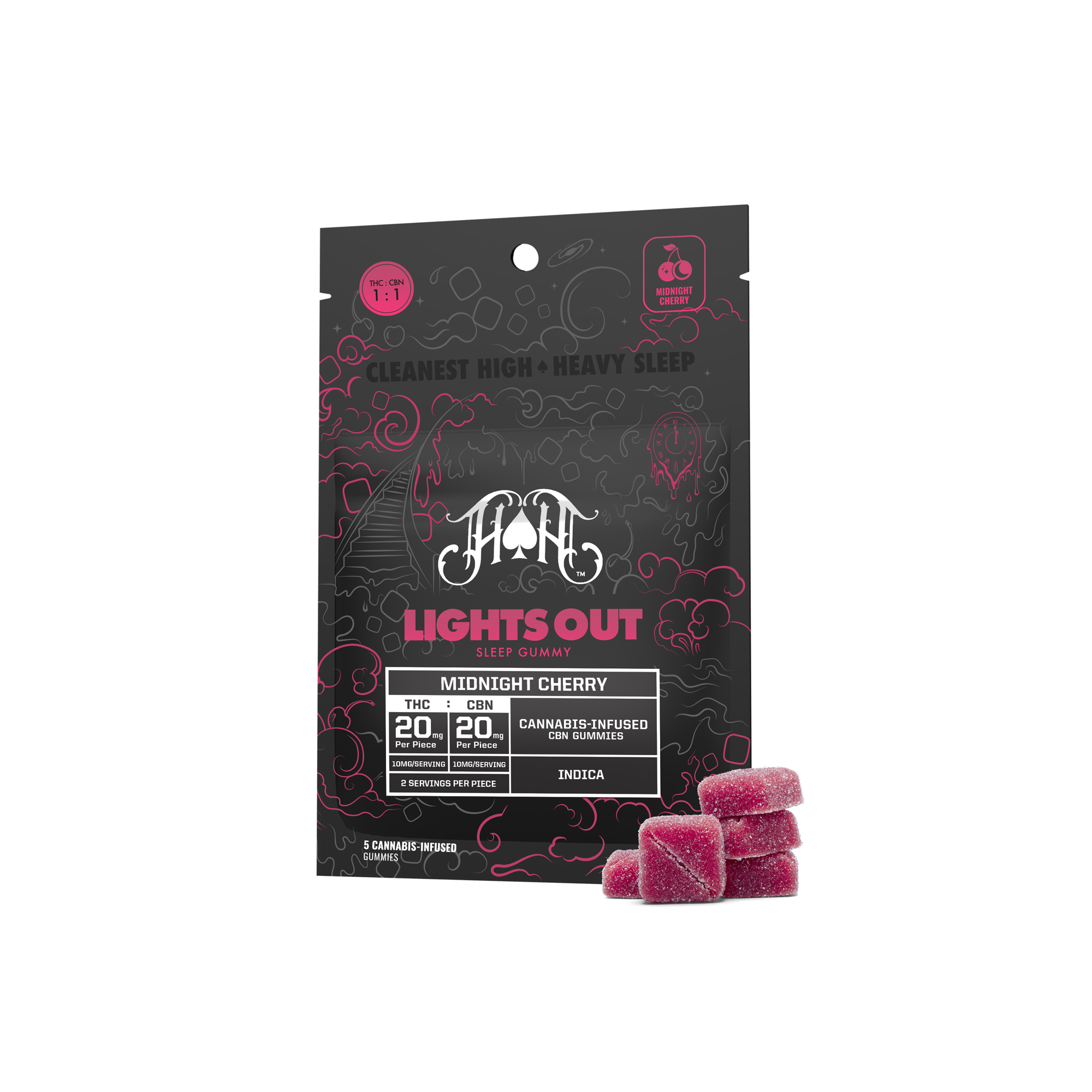
Heavy Hitters "Lights Out" (38 stores): the name lists 100 mg of THC and 100 mg of CBN in the pack. More CBN than most.
Did the CBN do anything? You can check. Take a sleep gummy one night and a plain gummy with the same THC another night.
An edible or a joint?
We couldn't find a trial that compared the two for sleep. What's known is the timing, and the timing matters.
Smoked or vaped: you feel it almost right away. Good if your problem is falling asleep.
Eaten: in a Johns Hopkins study, effects didn't start until 30 to 60 minutes after eating and peaked at 1.5 to 3 hours. It also lasts much longer, which is why people pick it for staying asleep. That's a reasonable idea. It isn't a proven one.
The long tail cuts both ways. Take a gummy at midnight and it can still be working when the alarm goes off. Take it about two hours before bed, and start with 2.5 to 5 mg of THC, the range New York's Office of Cannabis Management suggests for new consumers. Doses and timing are in our first-time edibles guide.
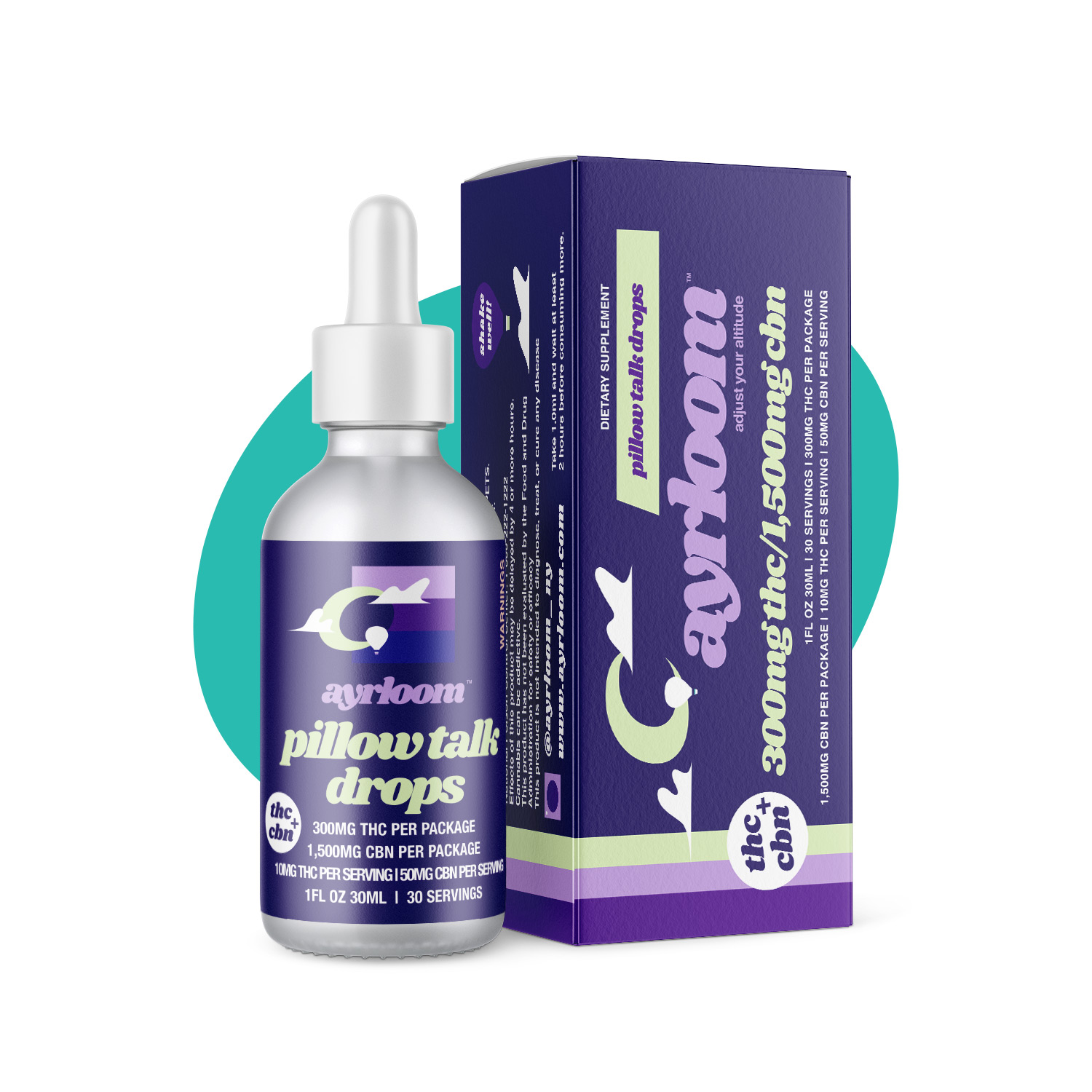
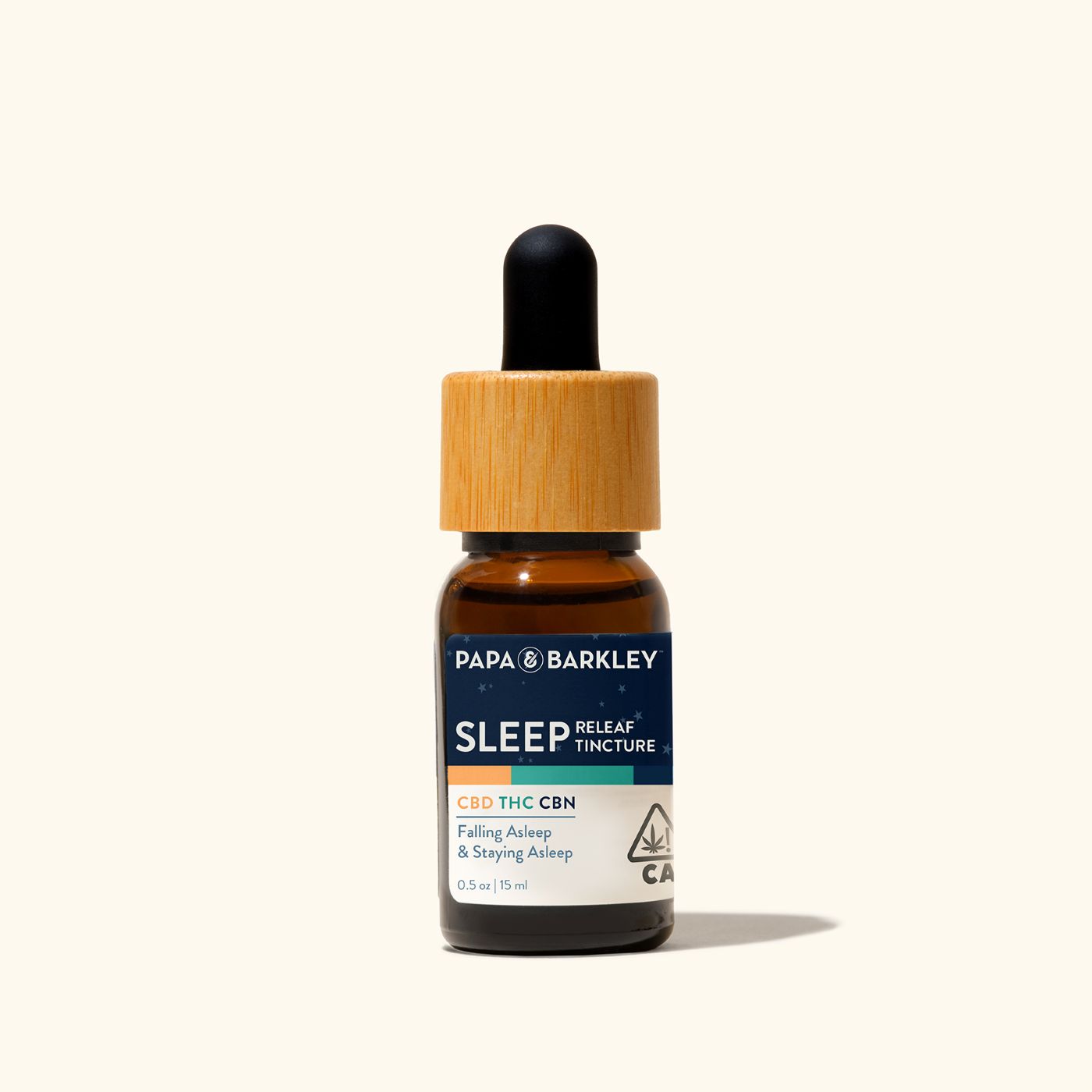
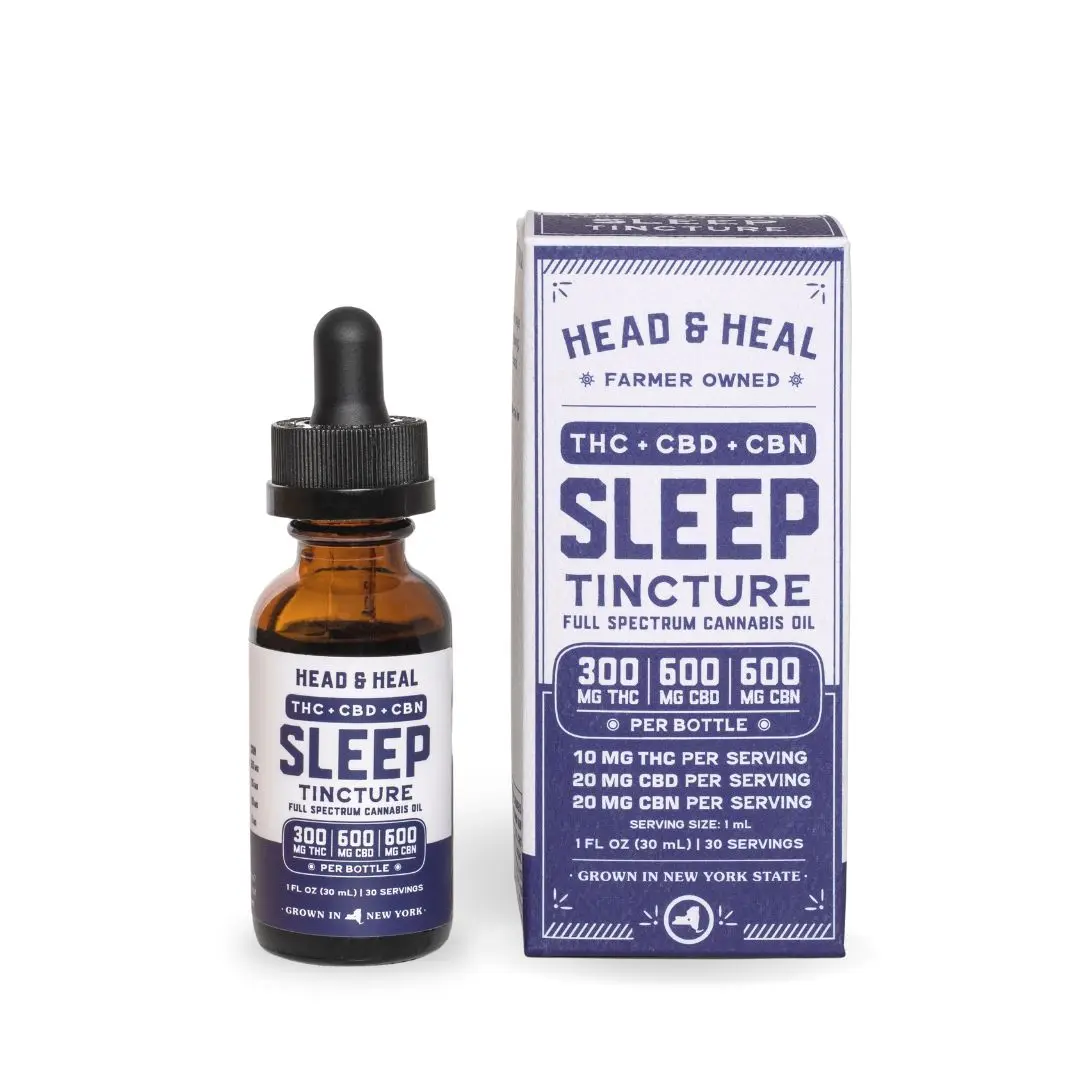
A tincture is the adjustable version: you measure drops, so you can find a small dose and stay there. Ayrloom's Pillow Talk Drops are in 107 stores, the most of any sleep product on Nifty. The name lists 300 mg of THC and 1,500 mg of CBN in the bottle. Papa & Barkley's Sleep Releaf (23 stores) is a 1:1:1 of CBD, THC and CBN, and Head & Heal's Sleep Tincture (14 stores) lists 300 mg THC, 600 mg CBD and 600 mg CBN. How much is in one dropper is on the label.
The 2017 review said CBD "may have therapeutic potential" for insomnia, based on early research. That's as far as it goes. There's still no good evidence that CBD on its own is a sleep aid. More in what is CBD.
Which one should you try?
Pick in 10 seconds
Can't fall asleep? Two or three puffs of flower or a pre-roll. It works in minutes.
Wake up at 3 AM? A low-dose edible, 2.5 to 5 mg of THC, about two hours before bed.
Want to control the dose? A tincture. Count the drops.
Curious about CBN? Fine, it costs about $2 more. Check the milligrams and compare it with a plain gummy.
Never had an edible? Start at 2.5 mg, on a night with nothing important the next morning.
Real insomnia, sleep apnea, or on medication? A doctor first, not a dispensary.
Side by side
Indica flower or pre-roll
CBN "sleep" gummy
Plain low-dose edible
Tincture
What does the work
THC
THC, plus CBN
THC
THC, often with CBN or CBD
Kicks in
Almost right away
30 to 60 minutes or more
30 to 60 minutes or more
Varies, check the label
Best for
Falling asleep
Trying CBN
Staying asleep
Small, exact doses
Proof for sleep
Thin
Thin, and CBN's is mixed
Thin
Thin
Median price on Nifty
$40 an eighth, $14 a 1g pre-roll
$26 a 100 mg pack
$23.89 a 100 mg pack
$50 a bottle
Watch out for
Smoke, and a gram is a lot
A few mg of CBN, 10 mg of THC
Taking a second one too early
Reading the dropper wrong
Our pick: a plain low-dose edible, 2.5 to 5 mg of THC, about two hours before bed, and not every night. It's the cheapest option, it lasts through the night, and you know exactly what you took. If you buy a sleep gummy, pick one with a low THC number per piece, like a 5 mg.
The catch: tolerance and quitting
This is the part the box leaves out.
It can stop working. The 2017 review warns that THC could hurt sleep quality over the long run. And in a US health survey of adults, people who had used cannabis in the past month were more likely to sleep under 6 hours or over 9 hours a night than people who hadn't. Heavy users were even more likely to be at the extremes. A survey can't show that weed caused it. People who sleep badly may use more. But it's not a picture of great sleep.
Stopping can be rough for a while. Sleep trouble and strange dreams are among the typical symptoms when regular users quit, according to a 2017 review of cannabis withdrawal. The same review says the brain's cannabinoid receptors start to recover within two days and are back to normal within about four weeks.
Week one without weed: the dreams come back loud · via GIPHY
The simple version: a few nights a week is a different thing from every night. If you notice you need more to get the same effect, that's tolerance. Take a break.
How to buy weed for sleep in New York
Read the milligrams, not the name. New York requires THC per serving and per package on the label, and any cannabinoid marketed on the box, like CBN, in milligrams. "Deep sleep" isn't a dose.
Compare the price. The median 100 mg pack of sleep gummies is $26 and a plain one is $23.89. The same product can cost a lot less a few blocks away. Search sleep products or CBN on Nifty to see every store's price, or check today's deals.
Open the lab report. The QR code on the package shows what the batch tested at: THC, CBN and, for flower, terpenes.
Start small. 2.5 to 5 mg of THC for an edible. Two or three puffs for flower. You can take more tomorrow night. You can't take less tonight.
Don't mix. Not with alcohol and not with sleeping pills, unless your doctor says it's fine. And don't drive until the next day.
The label doesn't tell you. A 2022 study of legal cannabis in six states found indica and sativa labels don't consistently match what's chemically in the flower. On Nifty, indica and sativa eighths have almost the same median THC: 27.9% and 27.3%.
Does CBN help you sleep?
The proof is thin. In a trial of 293 adults, 20 mg of CBN did not significantly improve sleep quality over placebo, though people reported fewer awakenings. Most CBN gummies also contain THC, which is the likelier reason they make you drowsy.
Are edibles better than smoking for sleep?
We found no trial that compared them. Smoking works almost right away. An edible takes 30 to 60 minutes or more to start, peaks at 1.5 to 3 hours and lasts longer, so people use it to stay asleep.
How many mg of THC should I take for sleep?
There's no proven sleep dose. New York's Office of Cannabis Management suggests new consumers start with 2.5 to 5 mg of THC in an edible and wait before taking more.
Do sleep gummies cost more?
A little. On Nifty on November 24, 2026, the median 100 mg pack of gummies with sleep, night or CBN in the name was $26.00. A plain 100 mg pack was $23.89.
Can weed make my sleep worse?
It can. A research review says THC could impair sleep quality long-term, and sleep trouble and strange dreams are typical symptoms when regular users stop. If you have ongoing insomnia, see a doctor.
Product counts, ratios, THC percentages, store counts, milligrams by product name and median prices: Nifty's own record of in-stock products at 603 licensed New York stores, November 24, 2026, grouped by product name. Close, not exact.
This article is general information for adults 21 and over. It isn't medical or legal advice. Talk to a doctor before using cannabis for a health condition, or with other medication.
What does THC do?
The high, the help and the hype
What does THC do? How it works in the brain, the two FDA-approved THC medicines, what research supports, the known risks and how to read a NY label.

 CannabinoidsWhat is CBN?Sold as the sleep cannabinoid. The proof is thin.CBN forms as THC ages and is sold across New York as a sleep aid. See what trials in people found, why it comes with THC, which CBN products NY stores carry and what to check on the label.
 EdiblesFirst-time ediblesStart with less than you thinkHow many mg of THC to take for your first edible, how long edibles take to kick in and last, what a serving is in New York, and the low-dose gummies, chocolates and drinks stores carry most.
 Cannabinoids